
You know that feeling when someone tells you the old playbook doesn’t work the same way anymore? That’s what’s happening with search.
For years, marketing has relied on a clean, structured journey. Awareness, consideration, decision. It was predictable, measurable, and easy to plan around. But somewhere along the way, customers stopped following that path.
Why Customer Behavior Changed
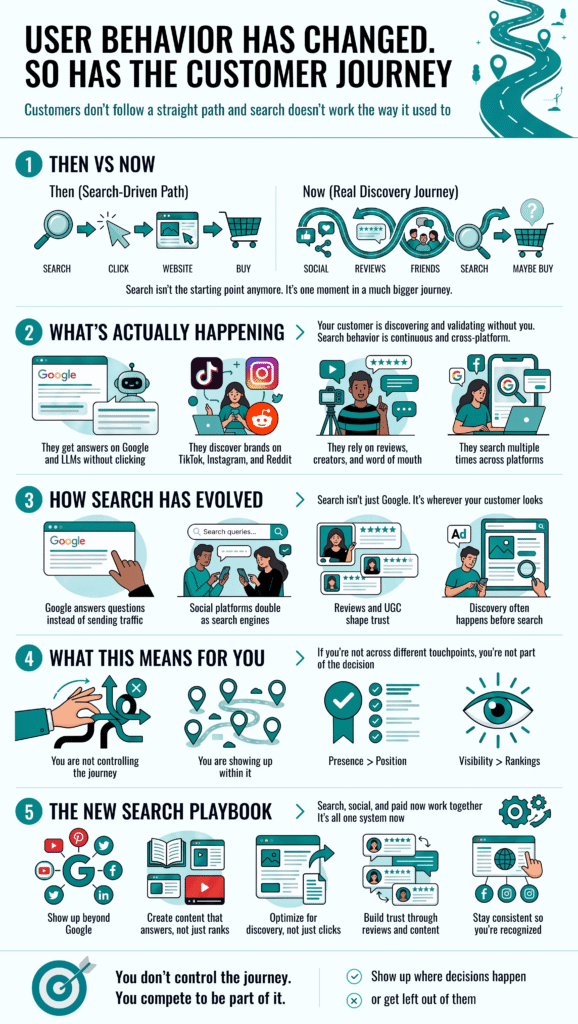
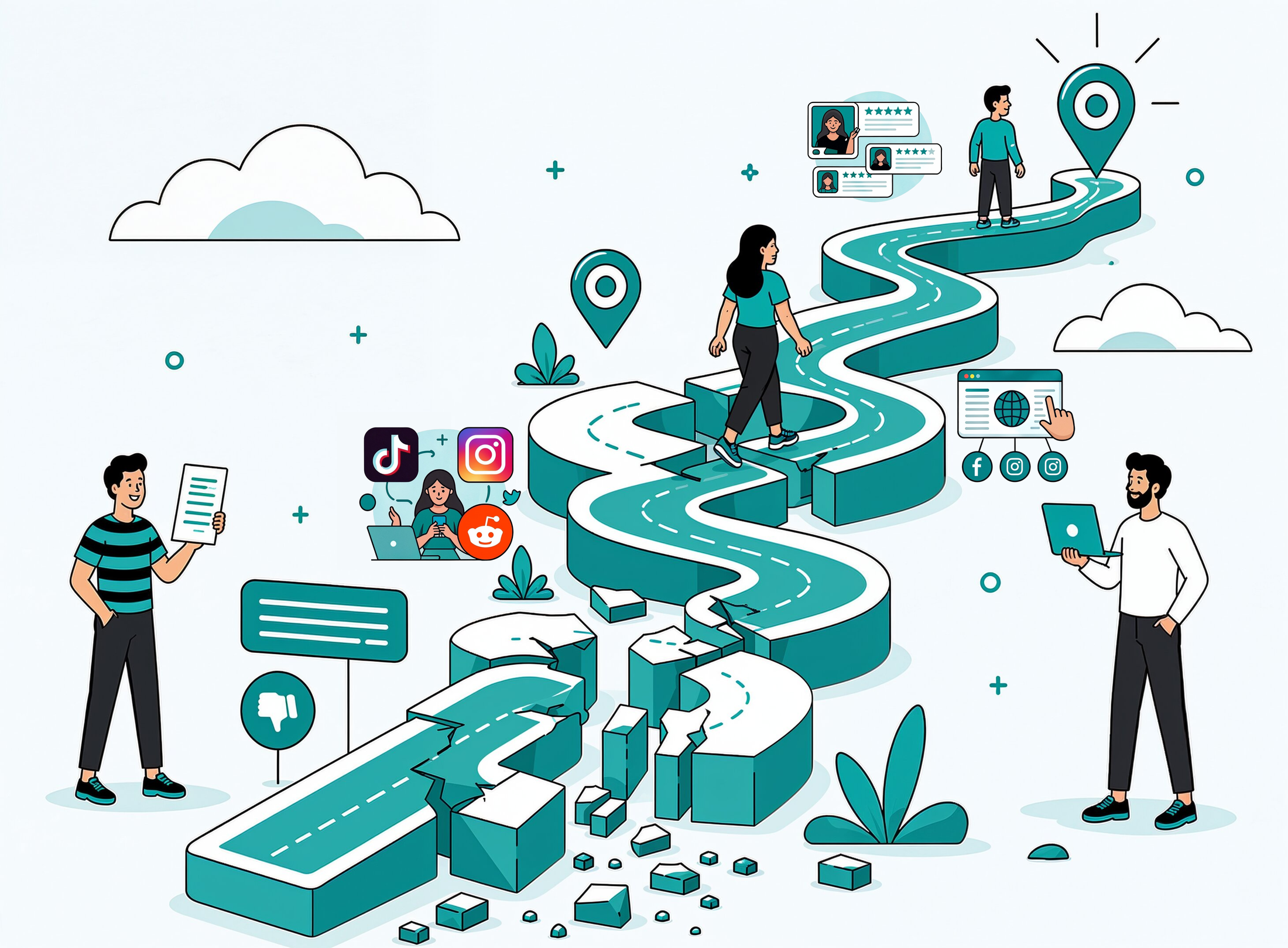
Your customers don’t move in straight lines anymore, and if you think about your own behavior, that’s pretty obvious. You might discover a product on Instagram, get pulled into TikTok, read reviews on Reddit, ask a friend, go back to search, and then decide, or not. That journey doesn’t follow a sequence. It’s messy, nonlinear, and constantly shifting.
Search itself has changed alongside that behavior. It used to be simple. Someone typed a query, clicked a result, landed on your site, and converted. Now, Google answers questions directly on the results page, Amazon surfaces products instantly, and platforms like TikTok or AI tools recommend things before someone even searches. Discovery doesn’t start or end in one place anymore.
The Rise of the Invisible Customer
What makes this shift more challenging is that much of it happens without you ever seeing it. Your customers are researching, comparing, and forming opinions before they ever land on your site, if they land on it at all. They are influenced by social content, recommendations, reviews, and conversations that are difficult to track.
By the time they do engage with your brand directly, they are often much further along in their decision making process. What used to be considered the “top” of the journey now happens across dozens of small, untracked moments that you don’t control.
The Reality: A Network of Touchpoints
Instead of a clean path, the modern search journey looks more like a network of touchpoints. A customer might discover your brand on social, watch reviews on YouTube, see you again in search, check your social proof, hear about you from a friend, visit your site, leave, and come back days or even weeks later.
There is no fixed order to this behavior. People move between platforms, revisit decisions, and change their minds. Each interaction plays a role, but none of them guarantee a conversion on their own. What matters is how all of those moments add up over time.
What This Means for eCommerce Brands
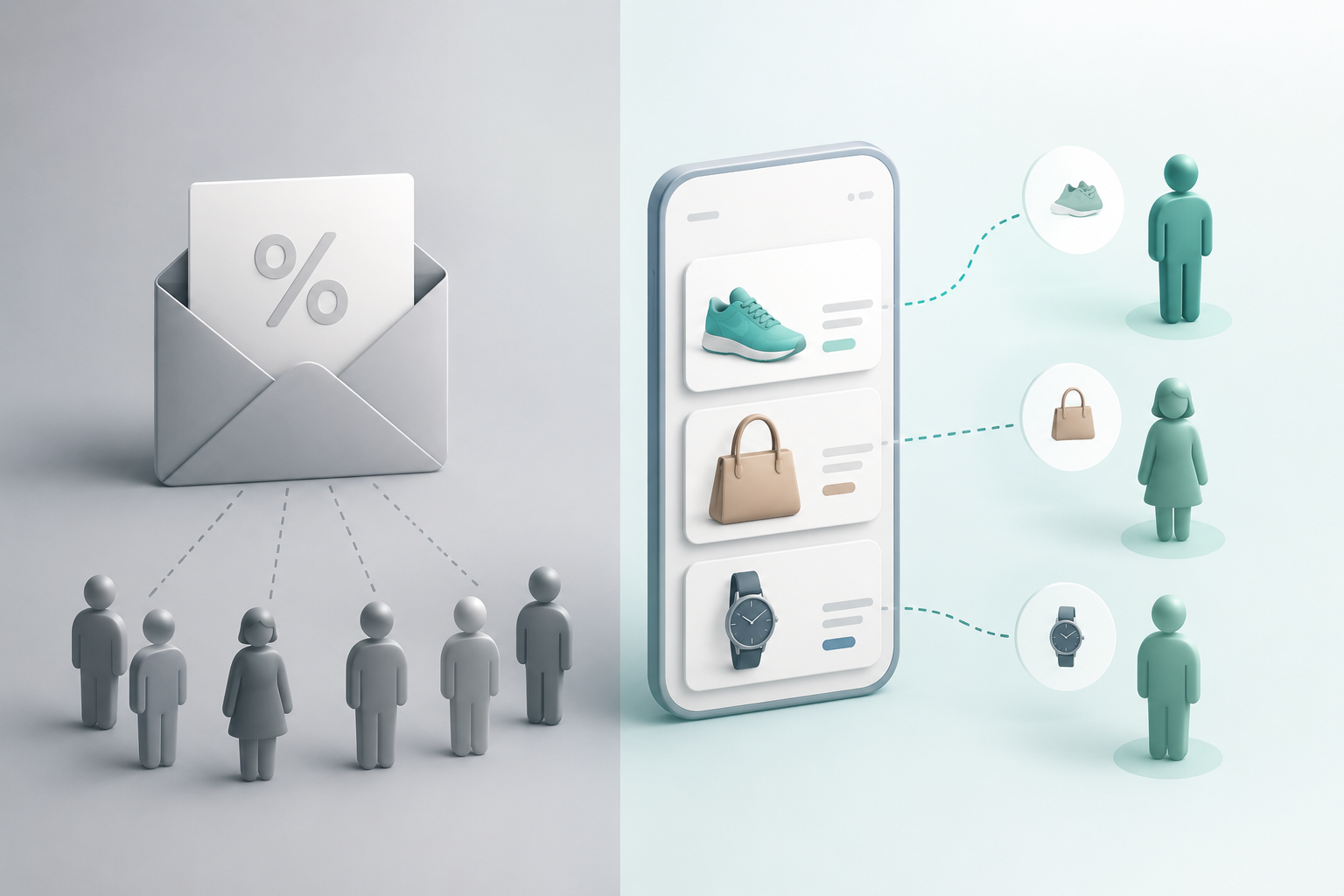
For eCommerce brands, this shift changes how you think about growth. It is no longer just about driving traffic and pushing people toward checkout. It is about showing up consistently wherever your customer is already spending time and being useful in those moments.
That means your visibility has to extend beyond your website. It includes how you appear in search results, how your brand shows up on social, what people are saying in reviews, and how often you are part of the conversation. Every touchpoint now has a job, whether that is building awareness, reinforcing trust, or making it easier to convert when the timing is right.
Zero-Click and Discovery-First Behavior
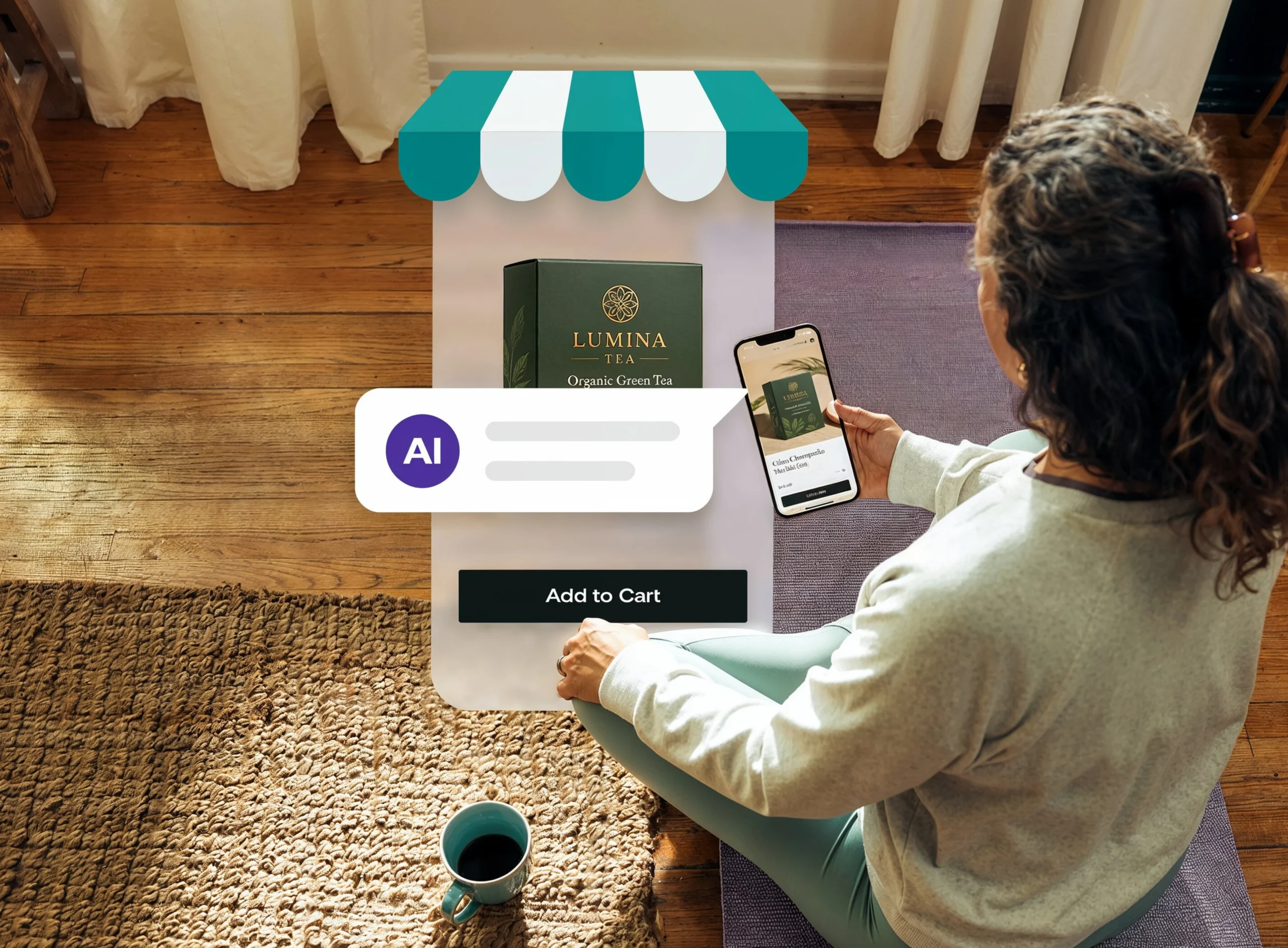
A big part of this shift is the rise of zero click behavior. People are getting answers without visiting your site. They are discovering products directly in search results, inside social feeds, and through AI driven recommendations. The idea that every interaction should lead to a click is becoming less relevant.
Instead of focusing only on traffic, brands need to focus on presence. Being visible in the places where decisions are being influenced matters just as much, if not more, than getting someone onto your website.
Why This Shift Is Actually Better
This change might feel like a loss of control, but it is actually a more accurate reflection of how people make decisions. Customers have always explored, compared, and relied on multiple sources before buying. The difference now is that it is happening across more platforms and at a faster pace.
For brands, that creates an opportunity to build real trust instead of forcing movement through a rigid path. When you show up consistently with something valuable, you are not just chasing conversions, you are building relationships.
What You Need to Do Now
This is not about abandoning search or performance marketing. It is about adapting how they fit into a broader strategy. You can’t rely on a single entry point anymore, and you can’t assume you control the journey.
Instead, your focus should be on showing up across channels, providing value at each touchpoint, and staying visible over time. That means thinking beyond rankings and clicks and focusing on how your brand is discovered, perceived, and remembered.
You’re Not Guiding the Journey, You’re Showing Up in It
The structure of the journey didn’t disappear, but the way people move through it has changed. Customers are creating their own paths, moving between platforms, and making decisions based on a mix of influence, trust, and timing.
The brands that win are the ones that show up consistently across that journey. Not just when someone is ready to buy, but in all the moments that lead up to that decision.