
The holidays may feel far away while the sun is shining, but summer is one of the most important times to prepare your Shopify store for Black Friday Cyber Monday.
Many merchants wait until September or October to begin planning. By then, deadlines are getting closer, suppliers are busier, and there’s less time to test ideas properly. Brands that start in July or August gain something their competitors don’t have: time to make better decisions without rushing.
Summer preparation gives you room to review past performance, plan inventory, grow your audience, test your store, and create a campaign that feels thought-out rather than thrown together at the last minute.
If November is when your BFCM campaign goes live, summer is when you build the foundation for it.
Here’s why starting early matters.
Get Ahead of the Usual BFCM Timeline
Most brands begin building their Black Friday Cyber Monday strategy two or three months before the event. But some successful brands start much earlier.
Shopify highlights Jones Road Beauty as one example. The brand begins its BFCM efforts during summer, followed by customer-facing campaigns in September. This gives the team time to attract and engage customers before the busiest part of the holiday season begins.
Starting early gives your team more breathing room. You can plan inventory, test promotional ideas, create content, and prepare your Shopify store without trying to do everything at once.
It also helps reduce supply-chain risk. Suppliers and fulfillment partners need time to manufacture, source, pack, and deliver products. If you wait until fall to place orders, you may face delays or stock shortages just as demand starts rising.
Summer gives you time to spot these problems early and make changes before they affect your customers.
Plan Your BFCM Inventory Before It Becomes Urgent
Inventory planning is one of the biggest reasons to start preparing in summer.
Begin by reviewing your previous BFCM performance in Shopify Reports. Look at which products sold well, which moved slowly, and which generated the strongest margins.
Don’t focus only on sales volume. A product may sell quickly but deliver a lower profit after discounts, shipping, and other costs. Another product may sell fewer units while contributing more to your overall margin.
An ABC inventory analysis can help you organize your products:
- A-grade products: Your main revenue drivers. Keep inventory healthy and avoid discounting these products more than necessary.
- B-grade products: Strong secondary products that may work well in bundles or as add-ons.
- C-grade products: Slower-moving products that may benefit from deeper discounts or other promotional support.
According to Shopify’s ABC inventory guidance, A-grade products usually account for the largest share of revenue. That makes running out of these products during BFCM especially costly.
Completing this analysis during summer gives you time to order more accurate quantities. You can give top sellers the attention they need while avoiding too much stock of slower products.
Start too late, and you risk going in either direction: running out of popular products while demand is high or ordering too much inventory that ties up your cash after the sale ends.
The goal isn’t simply to have more stock. It’s to have the right products in the right quantities.
Build Your Audience Before November
BFCM isn’t only about offering discounts. It’s also an opportunity to attract new customers and bring previous shoppers back.
Summer is a good time to grow and engage your email and SMS lists. You can create early-access signups, useful lead magnets, giveaways, or loyalty offers. Your Shopify store should also have clear email capture points that encourage signups without overwhelming visitors.
The important part is giving people a reason to join before promotional messages begin.
You don’t want November to be the first time subscribers hear from your brand. Use the months before BFCM to introduce your products, explain what makes them useful, and build familiarity.
When the sale begins, your audience should already know who you are and why they might want to buy from you.
A smaller, engaged audience is usually more valuable than a large, cold list built only a few days before Black Friday. Starting in summer gives you time to build trust rather than asking for a sale immediately.
Test Your Shopify Store Properly
Website speed, mobile optimization, and checkout performance can’t always be fixed overnight. Waiting until November to test your store leaves very little time to solve problems.
Mobile performance should be a priority. Tapcart’s 2024 BFCM research found that 81% of shoppers planned to use mobile shopping apps during BFCM, compared with 68% in previous years.
If your store is difficult to browse on a smaller screen, customers may leave before completing their purchase.
Use summer to test:
- Mobile page speed
- Navigation and site search
- Product pages
- Discount codes
- Cart and checkout
- Shop Pay and digital wallets
- Shipping and return information
- Email authentication and security
Tools such as Google PageSpeed Insights can help you identify performance issues. But automated reports shouldn’t be your only form of testing.
Place test orders yourself on several devices. Browse your products, add items to the cart, apply a discount code, choose a payment method, and complete the checkout process.
Try to experience the store as a customer would. Is important information easy to find? Do pages load quickly? Are discount instructions clear? Does the checkout work smoothly?
A small issue during a normal week may become a much bigger problem when BFCM traffic increases. Testing in summer gives you time to find and fix those issues properly.
Give Your BFCM Creative Room to Breathe
A successful BFCM campaign needs more than a discount banner.
Your creative work should help the campaign feel connected across your website, email, and social media. If every part is created separately at the last minute, the final campaign can feel rushed and inconsistent.
Beekman 1802, for example, begins developing its holiday story by the end of summer. The brand focuses on building customer interest before introducing the main promotion.
Summer gives your team time to create:
- Seasonal photography and videos
- Homepage designs
- Email templates
- Gift guides
- Social media content
- Product bundles
- Early-access campaigns
Starting early also gives everyone time to review the work. Images can be updated, emails can be edited, and product bundles can be adjusted before the campaign goes live.
Instead of rushing through creative work in October, you can build a consistent story over several months. By the time BFCM arrives, customers are already familiar with the campaign rather than seeing it for the first time.
Test Your Offers Before the Pressure Arrives
Summer is also a useful testing window.
Experiment with different messages, landing pages, email subject lines, ad creative, product bundles, and shipping thresholds. The goal is to learn what connects with your customers before November.
Testing doesn’t need to happen all at once. You can run smaller experiments and use the results to shape your final BFCM campaign.
The same approach should apply to your offer. Don’t choose a discount simply because your competitors are using it.
Work out how different promotions could affect:
- Profit margins
- Average order value
- Shipping costs
- Customer acquisition costs
A large sitewide discount may attract attention, but it may not be the best choice for your business. A product bundle, gift with purchase, or tiered discount could produce better results while protecting your margins.
Testing early helps you make that decision based on customer behavior and business goals , not pressure or guesswork.
By November, you should already have a clear idea of which messages, products, and offers work best.
Prepare for BFCM Problems
Even a well-planned campaign can run into problems.
What happens if your most popular product sells out? What if an app stops working during checkout? What if a supplier or shipping partner experiences delays?
Summer gives you time to create backup plans for:
- Traffic spikes
- Stockouts
- Supplier delays
- Checkout problems
- Failed discount codes
- Increased customer service demand
- Shipping disruptions
Your team should know what to do if something goes wrong. Document who is responsible for monitoring each area and who can make quick decisions when needed.
For example, one person may monitor inventory while another checks website performance. Someone else may handle urgent customer service issues or contact fulfillment partners.
Clear ownership reduces confusion. When a problem happens during BFCM, your team can respond quickly instead of trying to decide who should handle it.
You may not be able to prevent every issue, but you can avoid being completely unprepared.
A Simple Summer BFCM Action Plan
Starting early doesn’t mean doing everything at once. Break the work into clear stages so your team knows what needs to happen and when.
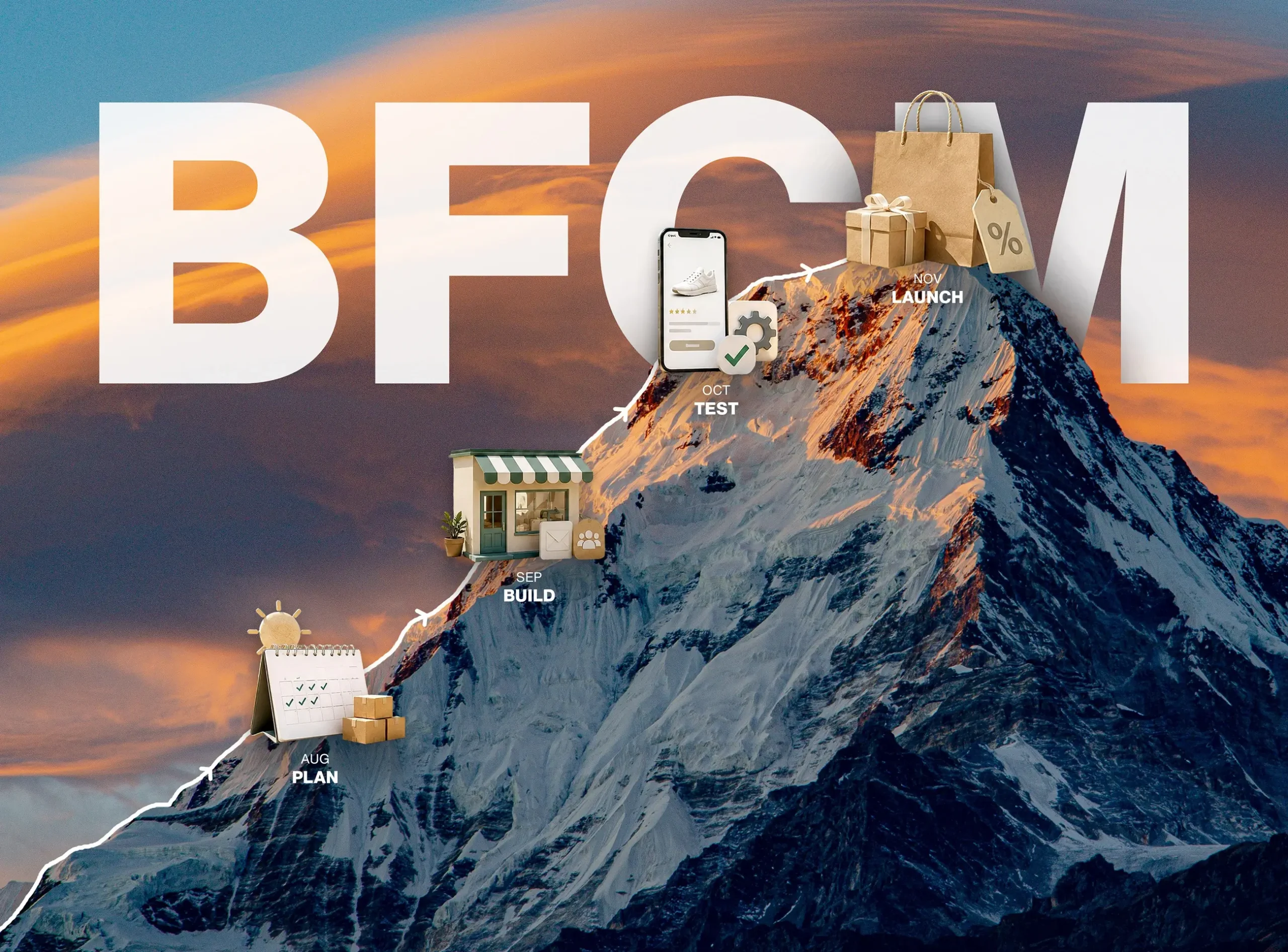
July–August
- Review previous BFCM performance
- Set sales and margin goals
- Forecast inventory
- Choose priority products
- Begin growing and engaging your audience
- Plan your promotional strategy
This is the research and planning stage. Focus on understanding what worked before and what needs to improve.
September
- Confirm inventory and suppliers
- Finalize offers and product bundles
- Launch customer-facing campaigns
- Produce campaign assets
- Complete your technical audit
By September, the main decisions should be taking shape. Your team should know which products you’re promoting, what the offer looks like, and what creative work is required.
October
- Test your website and checkout
- Train customer service teams
- Confirm fulfillment workflows
- Launch teasers and early-access campaigns
- Test your backup plans
October should be about checking, improving, and confirming not building the entire campaign from scratch.
By November, you should be ready to execute. You shouldn’t still be making major decisions or trying to work out what to do.
Make Summer Count
The scale of Black Friday Cyber Monday continues to grow.
Shopify merchants generated $11.5 billion during BFCM 2024. In 2025, that figure reached a record $14.6 billion, with more than 81 million customers purchasing from Shopify-powered brands.
Results at that scale aren’t created by last-minute campaigns. They come from months of planning, testing, and preparation.
Summer may feel early, but that’s exactly the advantage. While other brands wait until fall, you can build your audience, secure inventory, improve your Shopify store, and prepare a campaign that’s ready to perform.
You don’t need to have every detail completed in July. You simply need to start early enough to make thoughtful decisions, test your ideas, and solve problems without panicking.
BFCM happens in November, but much of its success is built during summer. Make that time count.
Frequently Asked Questions
1. When should I start preparing for BFCM?
Start in July or August to give yourself enough time to plan, test, and prepare.
2. How should I plan my BFCM inventory?
Review past sales, identify your bestsellers, and order stock based on expected demand.
3. How can I grow my audience before BFCM?
Build your email and SMS lists through early access, giveaways, and loyalty offers.
4. What should I test on my Shopify store?
Test mobile speed, product pages, discount codes, checkout, payments, and shipping information.
5. What type of BFCM offer works best?
It depends on your margins. Test bundles, gifts with purchase, tiered discounts, and sitewide offers.
6. How can I avoid problems during BFCM?
Prepare backup plans for stockouts, website issues, failed discounts, and shipping delays.