
Technology isn’t slowing down, and for most business leaders, keeping up can feel like a full-time job. The good news is that you don’t need to understand every new innovation. What matters is knowing which trends are actually changing how businesses operate, compete, and grow.
As we move into July 2026, several technologies are moving beyond experimentation and into real-world adoption. From AI agents and robotics to cybersecurity and quantum computing, here are the trends worth paying attention to this month.
AI Agents Are Finally Delivering Real Business Value
For years, AI agents were positioned as the future of work. In 2026, they’re becoming part of everyday operations.
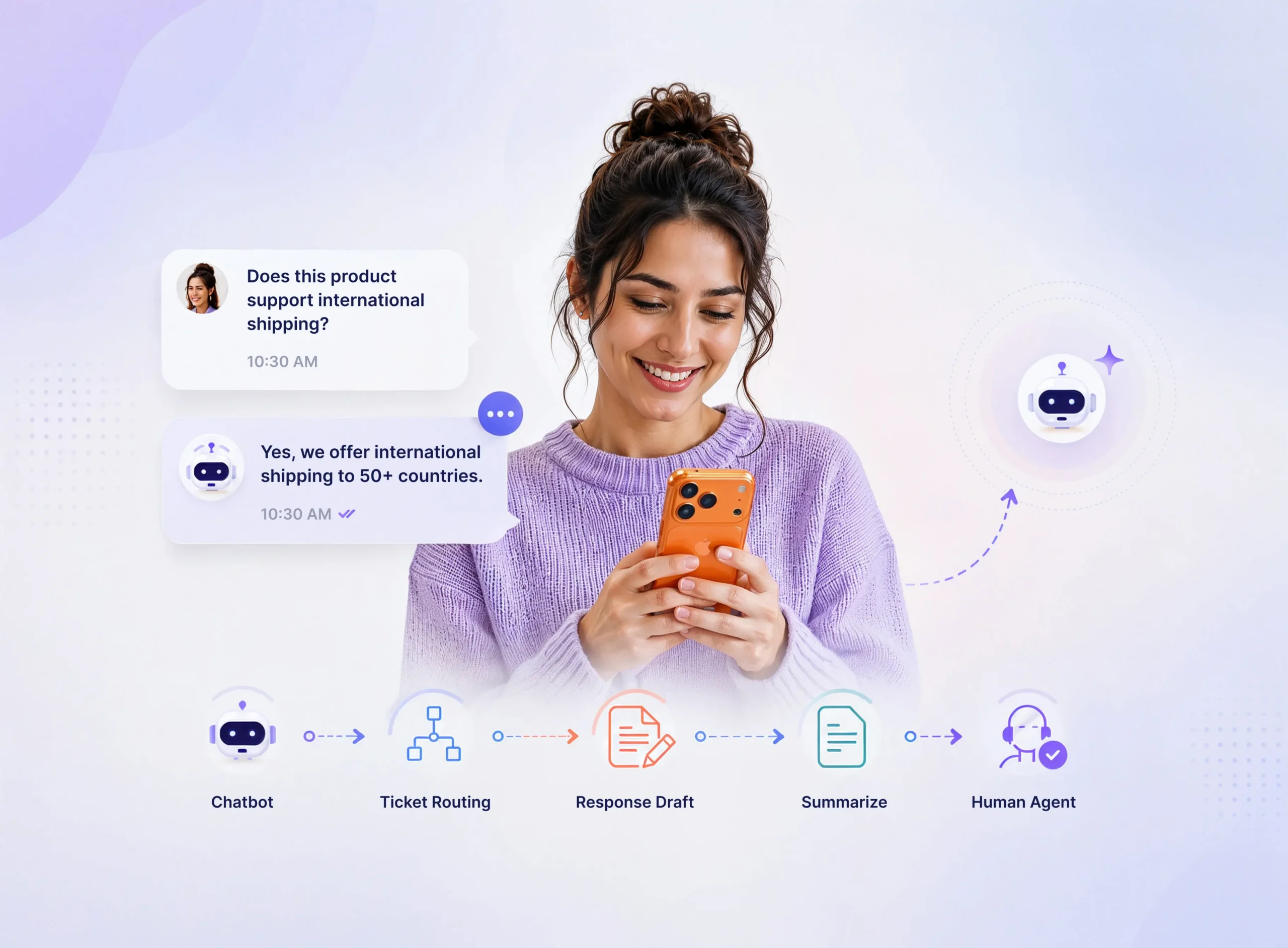
Organizations are deploying AI agents to answer customer support inquiries, research sales prospects, generate reports, schedule tasks, and automate repetitive workflows. What was once a pilot project is now becoming a practical business tool.
Yet despite the excitement, relatively few companies have successfully deployed AI agents at scale. The challenge isn’t the technology itself. It’s the process behind it.
Many organizations attempt to automate inefficient workflows rather than fixing them first. The companies seeing success are taking a different approach. They identify a specific business problem, redesign the process, and then introduce AI to accelerate it.
The lesson is simple: AI amplifies good processes. It doesn’t fix bad ones.
Your Cloud Strategy Probably Needs an Update
A few years ago, the answer to almost every infrastructure question was straightforward: move to the cloud.
Today, things are more complicated.
AI workloads have introduced new challenges around performance, privacy, compliance, and cost. Businesses are increasingly asking not whether they should use the cloud, but which workloads belong where.
Many organizations are now adopting a hybrid approach:
- Public cloud for scalability and flexibility
- Private cloud for sensitive information
- Edge computing for low-latency processing
- Regional cloud infrastructure to meet local regulations
The result is a more resilient and efficient technology stack, but also a more complex one.
Infrastructure planning has become a strategic business decision, particularly as AI computing costs continue to rise. Companies that fail to plan properly are already seeing AI-related infrastructure expenses reach tens of millions of dollars annually.
Robots Are Expanding Beyond the Factory Floor
Robotics adoption continues to accelerate.
Amazon recently surpassed one million deployed robots, while manufacturers such as BMW are using autonomous systems to move vehicles through production facilities. The global robotics market reached approximately $16.7 billion in 2026 and continues to grow.
The challenge is no longer teaching robots how to perform tasks. The challenge is helping them operate effectively in environments designed for people.
Warehouses, hospitals, retail stores, and homes are far less predictable than controlled manufacturing settings. Unexpected obstacles, changing conditions, and human interaction remain difficult for many robotic systems to navigate independently.
For now, human oversight remains essential. However, the long-term trend is clear. As robotic capabilities improve, automation will continue expanding into new industries and use cases.
Cybersecurity Is Becoming More Complex
Cybersecurity threats are evolving quickly, and attackers are increasingly targeting third-party vendors and partners.
Rather than attacking a company directly, bad actors often compromise suppliers, software providers, or service partners to gain access to larger networks. These supply chain attacks have increased significantly over the past several years.
At the same time, AI is helping cybercriminals scale phishing campaigns, generate convincing social engineering attacks, and automate credential theft.
Despite these developments, many successful attacks still exploit basic security weaknesses.
The most effective defenses remain surprisingly straightforward:
- Apply security patches quickly
- Enable multi-factor authentication
- Monitor unusual account activity
- Maintain strong access controls
- Follow consistent security best practices
Most breaches are not caused by sophisticated attacks. They’re caused by preventable security gaps.
Reasoning Models Have Become the Standard
The latest generation of AI models doesn’t simply generate answers. It reasons through problems before responding.
These reasoning models break down complex tasks into intermediate steps, improving performance on planning, analysis, coding, mathematics, and decision-making tasks.
What was once considered a premium capability has quickly become standard across major AI platforms.
The focus has now shifted toward efficiency. The challenge is no longer building models that reason well. It’s building models that reason quickly and cost-effectively enough to support everyday business applications.
Open-Source AI Has Closed the Gap
The AI landscape has changed dramatically over the past year.
Open-source models have rapidly improved, narrowing the performance gap with leading proprietary systems. Organizations now have access to powerful models that can be deployed locally, customized for specific use cases, and operated without ongoing API costs.
This shift is creating new opportunities for businesses that prioritize privacy, security, and operational control.
The next wave of innovation is expected to focus on specialized models designed for specific industries and functions, including software development, healthcare, finance, and customer service.
Quantum Computing Is Moving Toward Commercial Use
Quantum computing remains an emerging technology, but progress continues to accelerate.
Organizations in industries such as pharmaceuticals, finance, logistics, and advanced manufacturing are increasingly exploring pilot projects that combine classical and quantum computing resources.
Recent advances in error correction and system reliability are helping move quantum computing beyond research environments and into practical experimentation.
The long-term implications could be significant. Quantum systems may eventually transform optimization, simulation, and AI training while simultaneously reshaping modern cybersecurity and encryption standards.
For countries investing heavily in the technology, the economic opportunity is substantial.
Coding Agents Are Reshaping Software Development
Software development is becoming increasingly AI-assisted.
Modern coding agents can analyze entire codebases, make changes across multiple files, run tests, identify issues, and generate pull requests with minimal human intervention.
Rather than replacing developers, these tools are helping engineering teams eliminate repetitive work and focus on higher-value activities such as architecture, design, and problem-solving.
For many teams, the result is faster development cycles and improved productivity.
Multimodal AI Is Becoming Practical
AI systems are becoming increasingly capable of understanding and generating multiple types of content, including text, images, video, and audio.
Users can upload images, analyze documents, generate videos, transcribe conversations, and interact with information in ways that were not possible just a few years ago.
Video generation in particular has advanced rapidly, moving from experimental demonstrations to practical business applications.
Perhaps more importantly, these systems are beginning to develop a stronger understanding of how the physical world works. This capability will play an important role in future robotics, simulation, and autonomous systems.
The Real Challenge Is Execution
While technological innovation continues to accelerate, implementation remains the biggest obstacle.
Nearly every organization is experimenting with AI, yet many remain stuck in pilot programs that never scale.
Common barriers include:
- Poor data quality
- Unclear business objectives
- Lack of ownership
- Security and compliance concerns
- Attempting to automate inefficient processes
The organizations seeing the greatest return on investment are treating AI initiatives like any other business transformation effort. They define clear goals, assign ownership, establish governance, and measure outcomes.
Final Thoughts
July 2026 is shaping up to be another milestone month for technology.
AI agents are becoming operational. Robotics is expanding into new environments. Open-source AI is gaining momentum. Quantum computing is moving closer to commercial relevance. And cybersecurity challenges continue to evolve.
But technology alone isn’t the differentiator.
The companies that succeed won’t necessarily be the ones with access to the newest tools. They’ll be the ones that identify meaningful opportunities, execute effectively, and turn innovation into measurable business results.