
Do you know customer expectations have changed?
Nowadays people want instant answers, personalized support, and seamless experiences, whether they’re reaching out at 9 AM or 3 AM. At the same time, support teams are handling more inquiries than ever before.
That’s where AI comes in.
Whether you’re running a startup or managing a large customer support team, AI is becoming an essential tool for delivering faster service, improving efficiency, and creating better customer experiences without sacrificing the human touch.
Why AI Matters Right Now
Think about the last time you contacted a company for support.
Did you wait on hold? Get transferred multiple times? Have to explain your issue over and over again?
These are exactly the kinds of frustrations AI is helping businesses eliminate.
The numbers speak for themselves:
- The global AI customer service market is valued at $15.12 billion and is projected to grow at nearly 26% annually.
- 88% of contact centers are already using AI in some capacity.
- Customer expectations continue to rise, making fast, efficient service more important than ever.
How AI Improves Customer Service
AI takes care of repetitive, time-consuming tasks so your support team can focus on the conversations that require human expertise and empathy.
AI Chatbots
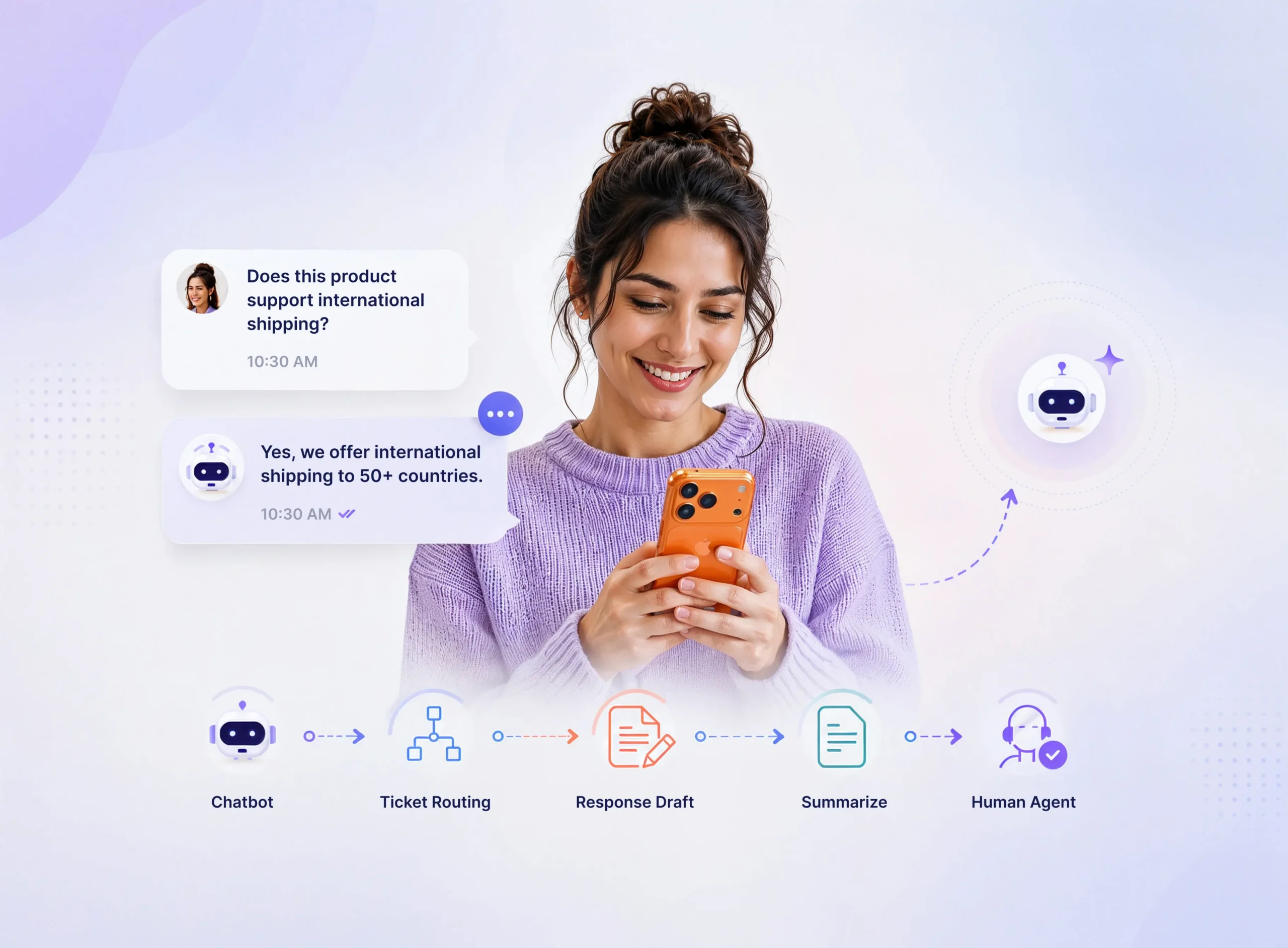
Instead of searching through FAQs or waiting for an agent, customers can receive immediate answers to common questions such as:
- Order tracking
- Account updates
- Returns and exchanges
- Shipping information
- Basic troubleshooting
Because AI operates around the clock, support is available 24/7.
Intelligent Ticket Routing
When a customer submits a request, AI can analyze the issue and automatically route it to the right person or department.
That means fewer delays, shorter wait times, and faster resolutions.
AI-Assisted Responses
Rather than starting every reply from scratch, AI can generate response drafts based on previous conversations, company knowledge, and support documentation.
Support agents simply review, personalize if needed, and send, saving valuable time while maintaining quality.
Conversation Summaries
When issues need to be escalated or transferred, AI automatically summarizes the conversation so the next agent has the full context without reading lengthy email chains or chat histories.
24/7 Availability
Customer questions don’t stop outside business hours.
AI ensures customers can always receive immediate assistance while your team focuses on more complex issues during working hours.
The Business Benefits
Faster Support, Happier Customers
According to Salesforce research, 82% of service teams report increasing customer expectations.
AI can significantly reduce response times, some organizations report improvements of up to 77%, leading to higher customer satisfaction.
Lower Support Costs
AI handles routine requests, allowing support teams to resolve more inquiries without continuously increasing headcount.
Some organizations have saved more than 430 agent hours by implementing AI-assisted support.
Consistent Customer Experiences
AI delivers consistent answers regardless of the time of day or which support channel customers use, helping create a more reliable experience.
Better Business Insights
AI can identify recurring customer issues, common questions, and emerging trends, providing valuable insights for support, marketing, and product teams.
How to Get Started
Implementing AI doesn’t have to be overwhelming.
Step 1: Identify Your Biggest Challenge
Start by identifying one problem AI can solve.
For example:
- Long response times
- High volumes of repetitive questions
- Poor ticket routing
- Customers repeating information multiple times
Step 2: Choose the Right Platform
Many customer service platforms already include AI capabilities, including:
- Intercom
- Zendesk
- Freshdesk
- Salesforce Service Cloud
- Gorgias
- Help Scout
There’s no need to build a custom solution from scratch.
Step 3: Start Small
Begin by automating frequently asked questions or simple support requests.
Once your team becomes comfortable, gradually expand AI into more advanced workflows.
Step 4: Keep Humans in the Loop
AI should enhance your customer service, not replace it.
Make it easy for customers to connect with a human whenever their issue requires empathy, critical thinking, or more personalized support.
Step 5: Measure and Improve
Track performance over time.
Review where AI is succeeding, identify areas where it’s struggling, and continuously refine your workflows using real customer feedback and data.
Challenges to Consider
While AI offers tremendous benefits, it’s not a complete replacement for human support.
Change Management
Some employees may worry that AI will replace their jobs.
The reality is that AI is designed to eliminate repetitive tasks so support teams can spend more time solving complex problems and building stronger customer relationships.
Data Privacy
Customer trust is critical.
Research shows that only 42% of customers fully trust businesses to use AI responsibly.
Be transparent about how AI is being used, protect customer data, and ensure compliance with relevant privacy regulations.
Quality Data Matters
AI is only as effective as the information it’s trained on.
Keeping your knowledge base accurate, organized, and up to date will lead to better responses and more reliable customer experiences.
Looking Ahead
The future of customer service isn’t about AI replacing people, it’s about AI and humans working together.
AI will continue handling routine tasks faster and more efficiently, while human agents focus on conversations that require empathy, creativity, and sound judgment.
As AI continues to evolve, predictive capabilities will allow businesses to identify potential customer issues before they become problems, creating even more proactive support experiences.
AI is no longer a nice-to-have, it’s quickly becoming a competitive advantage for businesses that want to deliver exceptional customer experiences.
Start small. Learn as you go. Improve over time.
Your customers will appreciate faster, more personalized support, and your team will have more time to focus on what they do best.
The best time to start was yesterday. The next best time is today.
What are your thoughts on using AI in customer service? We’d love to hear your perspective.