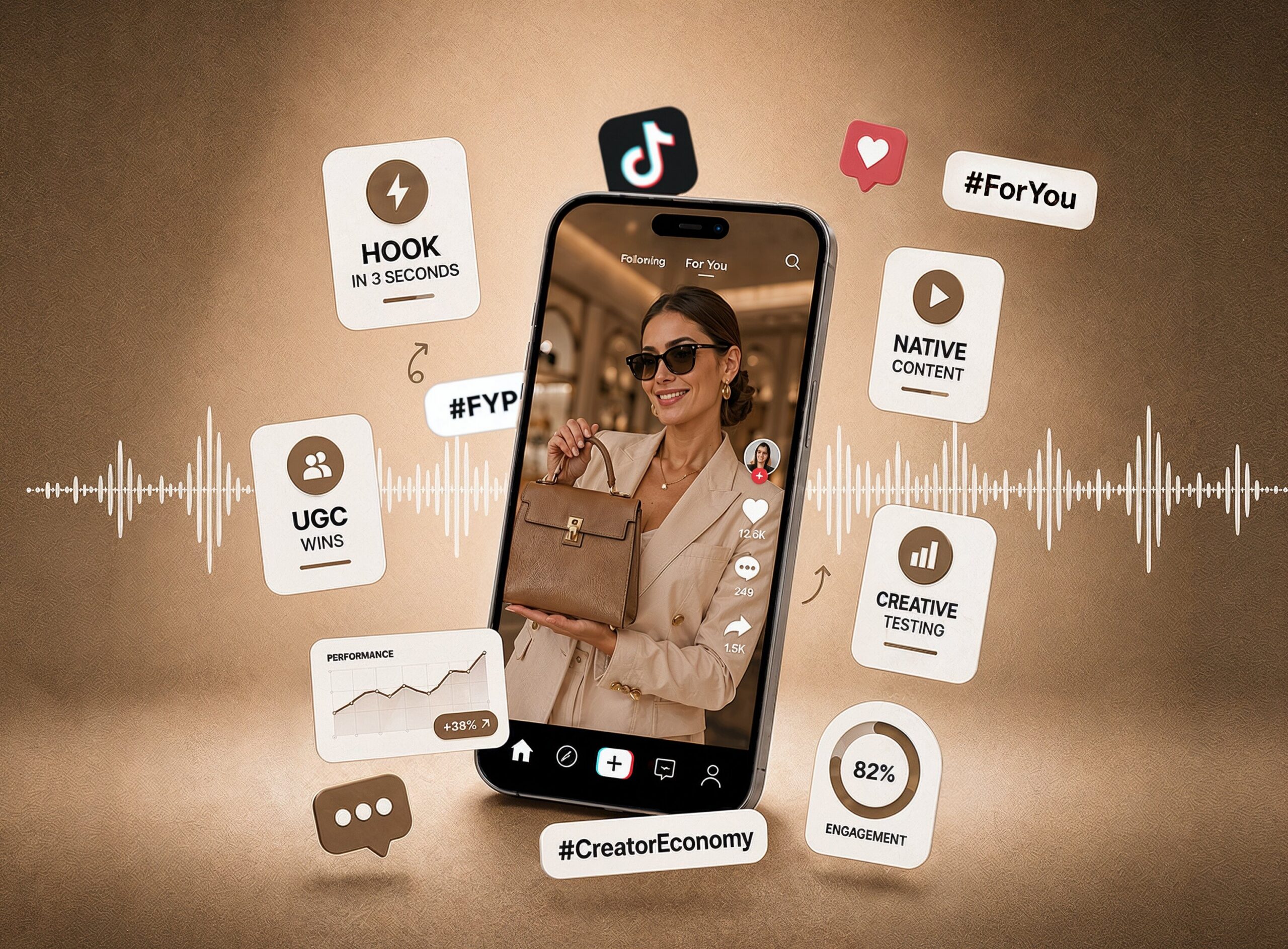

TikTok is no longer just a platform for dances, trends, and entertainment. It has become one of the most powerful advertising platforms for brands looking to drive awareness, engagement, and conversions.
But TikTok advertising works differently from traditional digital advertising.
Users do not open TikTok to watch polished commercials. They open the app to consume fast, entertaining, relatable content. That means brands need to rethink how they approach creative, targeting, and campaign strategy.
The brands winning on TikTok today are not creating “ads.” They are creating content that feels native to the platform.
Why TikTok Ads Work Differently
Unlike traditional social platforms, TikTok’s algorithm prioritizes engagement and watch behavior over follower count. This creates massive opportunities for brands willing to adapt their creative strategy.
Successful TikTok ads are:
- Fast-paced
- Authentic
- Creator-led
- Entertainment-first
- Built for mobile
- Native to TikTok culture
The goal is not to interrupt the experience. The goal is to blend into it.
1. Make Your Ads Feel Native to TikTok
One of the biggest mistakes brands make is repurposing polished Instagram or commercial-style creative for TikTok.
TikTok ads perform best when they feel organic and platform-native.
That means:
- Vertical video (9:16)
- Quick cuts and movement
- Natural lighting
- Real people
- Casual editing styles
- On-screen captions
- Trending sounds or creator-style voiceovers
In many cases, lower-production “UGC-style” content outperforms highly polished brand creative because it feels more authentic.
TikTok users want content that looks like something they would naturally encounter on their For You Page.
Best Practices
- Use creators, customers, or employees in videos
- Keep branding subtle in the opening seconds
- Avoid overly corporate visuals
- Design content specifically for TikTok rather than repurposing assets from other platforms
2. Hook Users Within the First 3 Seconds
Attention spans on TikTok are short. Users scroll quickly, which means the opening seconds determine whether someone keeps watching or moves on.
Strong TikTok hooks often:
- Create curiosity
- Introduce a problem
- Use a relatable POV
- Challenge assumptions
- Speak directly to the viewer
High-Performing Hook Examples
- “This is why your skincare routine isn’t working.”
- “I wish I knew this before buying.”
- “POV: You finally found a product that actually works.”
- “Nobody talks about this.”
A strong TikTok ad structure typically looks like this:
Hook → Problem → Solution → CTA
The faster you communicate value, the better your performance is likely to be.
3. Use Trends Strategically
TikTok trends move fast. Sounds, memes, filters, and editing styles evolve constantly.
Brands that participate in trends effectively often see stronger engagement because their content feels culturally relevant and timely.
However, trends should align naturally with your product and audience.
Forcing a trend into your creative simply because it is popular can feel inauthentic and reduce performance.
Focus On
- Trending sounds
- Creator storytelling formats
- Popular editing styles
- Viral meme structures
- TikTok-native humor
According to TikTok, users are more likely to engage with brands that participate in platform culture authentically.
4. Sound Matters More Than Most Brands Realize
TikTok is a sound-on platform.
Music, voiceovers, narration, and sound effects are central to how users experience content. Ads without sound often feel incomplete or disconnected from the platform experience.
TikTok reports that the majority of users consider sound essential to the app experience.
Creative Recommendations
- Add voiceovers for storytelling
- Use trending or emotional music
- Include creator-style narration
- Sync cuts and transitions to audio
- Use captions for accessibility and silent viewing
When running paid ads, make sure audio is approved through TikTok’s Commercial Music Library.
5. Test Multiple Creatives Constantly
Creative testing is one of the biggest drivers of TikTok ad success.
One ad is rarely enough.
TikTok’s algorithm performs best when advertisers provide multiple creative variations to test against different audiences and behaviors.
Elements to Test
- Hooks
- Video length
- Creators
- Product angles
- CTAs
- Music
- Editing styles
- Captions
- Thumbnails
Even small changes in the first few seconds can dramatically impact performance.
Creative iteration is often more important than audience targeting on TikTok.
6. Start With Broad Targeting
Many advertisers overcomplicate targeting too early.
TikTok’s algorithm is designed to identify high-intent users through behavioral signals. Starting too narrow can limit delivery and increase CPAs.
Broad targeting often gives the platform more room to optimize performance.
Once campaigns gather enough data, brands can layer in:
- Retargeting
- Lookalike audiences
- Customer lists
- Interest refinement
The goal early on should be data collection and algorithm learning.
7. Refresh Creatives Before Performance Declines
Creative fatigue happens quickly on TikTok.
Even strong-performing ads eventually lose effectiveness as audiences become overexposed to the same content.
Signs of creative fatigue include:
- Rising CPA
- Falling CTR
- Lower watch time
- Reduced engagement
Instead of rebuilding campaigns from scratch, brands should continuously introduce new creatives into existing ad groups.
Top-performing TikTok advertisers operate on a constant creative refresh cycle.
8. Measure Performance and Optimize Continuously
TikTok advertising should be approached as an ongoing testing and optimization process.
Success comes from analyzing performance data and identifying what creative elements are driving results.
Key TikTok Metrics to Monitor
- Watch time
- Thumb-stop ratio
- CTR
- Conversion rate
- CPA
- ROAS
- Frequency
- Creative fatigue indicators
Split testing different creatives, offers, hooks, and audience strategies helps brands scale more efficiently over time.
The more creative data you collect, the stronger your campaigns become
TikTok rewards brands that understand the platform’s culture.
The highest-performing TikTok ads rarely look like traditional advertising. They feel authentic, fast, entertaining, and human.
Brands that succeed on TikTok focus less on polished production and more on:
- Strong hooks
- Creator-led storytelling
- Native platform behavior
- Consistent testing
- Fast creative iteration
The brands winning on TikTok today are not interrupting the feed.
They are becoming part of it.